|
This page last changed on Jun 16, 2016 by mage.
click on the ADD COMMMENT button below to post your update
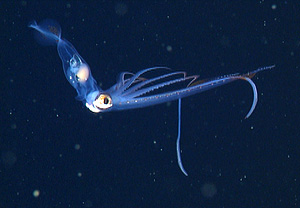
This week has really flown by, but I'm in need of a 3 day weekend. We were able to run some of the videos through the event detection software over the break and I returned to a mass of data yesterday. I have 19 pictures of Chiroteuthis!!! (and approximately 5,000 pictures of marine snow and another 2,000 pictures of the edge of the ROV). We began the process of automation with the least amount of human supervision possible, but I feel we're learning it takes a lot more supervision to be successful. Its a careful balance between more and more supervision and it being less and less worth the effort compared to the process we have in place. I do have a clever idea, but you'll have to wait until next time!

Posted by dhollis at Jul 07, 2016 08:08
|
|
Despite being a shortened week, and being hampered by the flu, it has still been a productive week. Since I've been laid up and working from home, I took the opportunity to start writing out my methods section for my final paper. If you are stuck on something or waiting for results, this is a good way to stay productive. I find that it helps with the analysis to write out what I've done so far. In addition it gives you the benefit of having all of your methods fresh in your mind because you are still in the process of utilizing them.
I'm excited about the ricketts lab tour tomorrow, thats something i've wanted to do for a long time now, I hope I'm back to 100 percent by then.
Posted by dburrier at Jul 07, 2016 09:05
|
|
This past week has mostly been filled with intern adventures and shenanigans, but the short time I spent at MBARI has given me more information about what does NOT stimulate bioluminescence from doliolid photoproteins. As exciting as failed experiments are, it's starting to look like my project is better suited for a graduate student (which I might just try to pursue) rather than a 10-week intern. I've become extremely invested in the project, and am determined to make some sort of progress in activating these photoproteins, and in the meantime have ruled out countless possible ways to activate a photoprotein.
My focus up until now has been to add several potential cofactors (including calcium, ATP, NADPH, etc) to crude purified doliolid photoprotein under a variety of conditions (pH, varying concentrations) to rule out (and hopefully rule in) methods of activation. Now, because I have received no signal, I am thinking that my photoprotein has been "used up", i.e. that it has already bound to its necessary cofactor(s?) and consequently changed structure and emitted light. Thankfully, there is a way to regenerate photoproteins from apo-photoproteins (conformationally changed photoproteins). Hopefully after regeneration, I can apply the protocol that worked so beautifully on the cruise and get some light!
As a way to confirm that I'm not doing something horribly wrong with these experiments, I tested for calcium-activated bioluminescence in the shallow radiolarian Collozoam, and received signal. Since the radiolarians have been so good to me, I will also work on purifying and characterizing their photoprotein.
Posted by cpayne at Jul 07, 2016 09:39
|
|
This week has been a short but busy week. My mentor and I have planned to officially start our experiment next week, so while he is away, I'm preparing all the materials we will be needing. That includes autoclaving glassware and gathering everything we need (everything I can find at least). Other than getting the materials, I'm trying to play around with the dissecting scope I will be using so I am ready to go on experiment day.
Posted by asan at Jul 07, 2016 09:56
|
|
I was able to get my experiment back on track and spent an hour and a half pooling DNA. They are gonna be shipped to Stanford to be sequenced today! My mentor should be back Monday so that'll be cool. Also I'm learning R which is, at least in the beginning lesson, not that hard. The intern bbq is looming which means I'm going to have to cook large amounts of food stuffs which always sounds fun in my head and then the actual action of doing it happens...
Posted by bcorbett at Jul 07, 2016 11:24
|
|
Look, I'm finally writing my confluence on time! Shoutout to me to achieving the bare minimum by week 6. Sorry George and Linda.
This was a short week during which approximately 2% of the people who I needed to answer my emails were actually accessible, so it hasn't been terribly successful. I did manage to screw up the connection between Pamguard and my database, so I'm trying to figure that out. I also ran some Cuvier's beaked whale files from an online database through my different classifiers and found that the signals are pretty different from my data. I am not inclined to believe that this means my whales aren't Cuvier's beaked whales, it just means that there are certain parameters that my tweaked classifier is using that work for the MARS data that can't be generalized. Either that or all my tweaking has actually made the classifier worse, which is another distinct, if disappointing, outcome. I'm still trying to gain a deeper understanding of what each of the parameters really looks for to best fit it to my data, but that requires I extract frequency and amplitude information from individual clicks which requires some hard-core Matlab. I'm going to meet with my mentor later today to do said hard-core Matlabbing, assuming I can snag a license.
I read a really interesting paper yesterday about the known ranges of all the species of beaked whales. Basically what I learned was that we have pretty much no idea the range of a lot of species. Perrin's beaked whale, for example, has only been described from like five strandings. An entire species, where literally the only thing we know about them is that five of them died and washed up between Monterey and San Diego. Is it a cosmopolitan species that lives everywhere and just happened to wash up there? Is it endemic to the small amount of water between Monterey and San Diego, or some place further out to see that gets caught in the current and ends up there? Is it a big population that's good at hiding, or is it small and rare? There is actually pretty much no information on this, which is completely fascinating. I think everyone kind of assumes that we know about all the big things in our world. We don't exactly go around discovering new large terrestrial mammals every day. But in the ocean it's a totally different story. Perrin's beaked whales were only first described in 2002. I was alive when they discovered a whole new kind of whale! These are not even microscopic, they're like 4 meters long and we didn't even know they were there. They've never been seen alive, which just confirms how important acoustics are going to be to the future of marine mammal research, because I'm willing to bet that they have a species-specific acoustic signal that will be a lot easier to track than visual surveys. Beaked whales may not be as charismatic as orcas or humpbacks, but they're fascinating because there's so much room for research there. Even my dearest Cuvier's beaked whales, the most widely distributed of the beaked whales, are very rarely seen in visual surveys so we don't even really know much about their population size or density throughout their range (hence, my thesis project last year!).
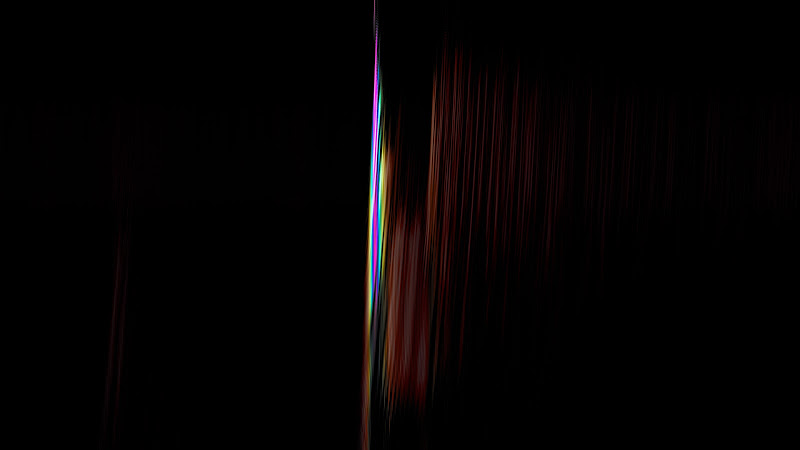
Ok, that's more me fangirling over whales than a research update, so I'll leave you with a cool wavelets image of a Cuvier's beaked whale click, which is a method I'm comparing to Pamguard. This is a visual representation of the acoustic signal, but it looks like something you'd see through a telescope.
Posted by ejacobs at Jul 07, 2016 11:40
|
|
This week is going by way too fast! I have been working on pulse 65 measurements all week, and should be finished by today. After that I just have to complete the measurements for pulse 66 then I'll officially be done collecting data. When I finish pulse 65 today I plan to make a query so that I can then create a histogram and analyze the data. I will be comparing this with pulse 64 to see if there are any patterns or differences. Aside from that, Ken Smith's lab is working on figuring out a good method to study migration patterns for benthos near Station M. The plan is to hopefully place a camera tripod at the old Station M site, which will potentially allow us to track where benthic animals are going when they travel out of camera range at the new Station M site. We originally played around with the idea of setting up a zip line type system that went from the old station M site to the new station M site, with a camera attached to the line that would be able to travel back and forth, but the tripod option will probably be more effective. I also started writing me paper this week! I am almost done with the introduction section, which usually takes the longest to write, so I'm a happy camper. Still lots to do and time is slipping away! Hope everyone is having a great week! 
Posted by dfabian at Jul 07, 2016 11:58
|
|
I didn't have a super productive week (can we even call it that?). I'm getting shut down by scalaxb, the tool I thought was going to help translate XML schema files to Scala. At first it seemed like a good tool, as it quickly translated the main schema files and had a structure that more or less made intuitive sense. I can't get it to work with any files that contain references to other files, though, which largely limits its usefulness. It has almost no documentation, so getting it to work is a crapshoot. There are alternate methods, but they wouldn't translate the schemas to Scala, presenting another can of worms to deal with. My mentor and I are exploring workarounds.
The weeks fly by! Feeling the bind a little bit. Hoping to get past this hurdle quickly.
Posted by emeckler at Jul 07, 2016 12:03
|
|
A short week made even shorter by Wednesday night races, but actually got a fair amount accomplished. Fit algorithm got trimmed down from ~1000 lines of Matlab to only ~600, and is completely functional (albeit not as user friendly as I thought this morning...). Have a few notes for improving it this afternoon, and it should be all set to go out to sea with us next week!
Still finding strange results from our data though. We've known for a while (from other papers) that pressure and temperature have effects on how water molecules can vibrate/rotate/librate, but it appears that those effects are either strongly amplified or completely changed when the water is jelled. Results so far are inconclusive on which. Whatever jellies do to water, it's certainly weird and warrants more study.
We're gearing up to head out to sea too, with a little more time on Monday to prepare, once I get back from the aquarium trip that is. It may turn out that we can accomplish everything we want to in just three days, and might make it back late on Thursday instead of Friday afternoon.
Posted by mwoj at Jul 07, 2016 12:55
|
|
This week I moved on to signal processing and learning about various filtering methods to try and reduce the noise in our accelerometer readings. When running the linear translation stage at slow accelerations (1 - 50 mm/s/s) there is considerable amount of noise that is being detected from the servo drive. I contacted the manufacturer to determine the proper lubrication and maintenance procedure, but have yet to hear back. In the mean time, I have begun to become more familiar with the Matlab Signal Processing toolbox. This allows the user to import a signal (our noisy accelerometer values) and then develop various types of digital filters than can then be exported and applied to all of the test data that I collected last week. One simple filter that I have been trying is the "moving average". The next step is to determine the optimal number of samples used to calculate the moving average and then compare this performance to more advanced filters such as the Welch filter.
Posted by nraymond at Jul 07, 2016 14:01
|
|
This week has been super exciting even though it is only 2 days! I finally have a good direction about where my project is going. I am going to be seeing if physical factors of the Bay measured and derived using the Dorado ROV (SST, thermocline, stratification, etc) can be used to sort of predict and understand biological variability (between Diatoms, Autotrophic Dinoflagellates and Heterotrophic Dinoflagellates) in space (map/position in the bay/depth) and time(seasonal,monthly, etc.). I have figured out how to separate the profiles collected by which species was dominating, so up next is to quantify stratification and look at wind data to see how upwelling plays a part in this too. Yay!
Posted by asmith at Jul 07, 2016 14:30
|
|
What a funky week to get work done! Don't get me wrong, these long weekends sure are nice, but it's been a challenge working around folks' scheduled away/vacation time.
Fortunately, I was able to coordinate three meetings (one yesterday, two today) with MBARIans whose work ties in to the content featured in my Story Map website: Ken Johnson linked me up with a few of his SOCCOM (Southern Ocean Carbon and Climate Observations Modeling) contacts and gave me a walkthrough of how the publicly available data visualization tools work; Ken Smith lent me hard copies of the research papers surrounding his work on free-drifting icebergs in the Southern Ocean (my eyeballs feel happier reading printed material than from a digital copy on a computer screen); and Brett Hobson explained the technology behind the iceberg AUVs and the implemented use of terrain-relative navigation. All three were extremely helpful and wonderful to chat with!
I'm hoping to get some additional insights from female MBARIans who've worked on Antarctica and Southern Ocean related projects, but the upcoming Flyer/Brewer cruise, along with my project's looming deadlines, may hinder things.
This afternoon, I joined Nick and Aileen in speaking to a group of students from Pajaro Valley High School. We shared our unique backgrounds and paths, along with bits of advice for navigating college and career options.
Looking forward to tomorrow's tour of Ricketts' lab! I'm curious about any new plans or changes since my visit last summer (I believe the city now owns the lab...? At the time, they were seeking public input on what to do with the downstairs/lab/garage space).
Posted by jvalenzuela at Jul 07, 2016 16:25
|
|
This week has been short but that doesn't mean it wasn't busy too.
Since day one I have known which is my project but I didn't know how I will be doing it, even Maria (one of my mentors) was a little bit confused about it, but this week I had a meeting with my two mentors to talk about how are we gonna do it.
At first, we thought about using bacteria (with fluorescent genes) to feed micromonas in the dark and see if they actually eat them or not instead of using beads because they can digest the bacteria but not the beads so we make sure they will eat bacteria and not spit it out. But the problem is that maybe the bacteria are too big for micromonas to eat them and we don't have enough time to prove it, so we're just gonna use the beads and see what happens.
Also this week I made by myself a new media with low salinity and low nutrients for my experiments and today we check it and transfers some cultures to that media to see how they responded to it. The media is perfect (good pH and salinity) but we still don't know how is gonna affect to micromonas.
I have been using a machine call The Accuri to check my cultures but we're thinking about using flow cytometry to have more information. The problem is that there's so many people in my lab and they're always using the machine so maybe we'll just use the Accuri for the rest of the internship.
About the experiment we decided to start it on Thursday and check the cultures during 24h, so one of my mentors and I are gonna be sleeping here at MBARI. Another great experience!!
Posted by mariacl at Jul 07, 2016 16:54
|
|
Last Friday's pilot experiment was amazingly frustrating, but I also learned a lot so I'm gonna try and look at it from that lens. My mentor and I dissected a male abalone for sperm. However, there was a lot of matter from the digestive gland next door that came with it, which made my samples murky. After mixing the sperm with seawater, I took 10 µl, 50 µl, and 100 µl samples to the microscope. The purpose of this experiment was going to be to generate a standard curve of sperm motility in response to gamete age (over the course of 4 hours), however I ended up not having time to do this, so this pilot's purpose then became to test the proposed methods for the future Sperm Motility~OA experiment.
The 100 µl sample showed a lot of sperm in the field of view, but the depth made it hard for the video to focus as the sperm were swimming up and down the water column. 10 µl gave the best clarity, so I think I will use this volume for sampling in the future. I also had trouble with magnification. 10x objective was the only one that would focus, however the sperm are TINY!! I'm hoping to get the 40x to work because I believe that will be the most optimal.
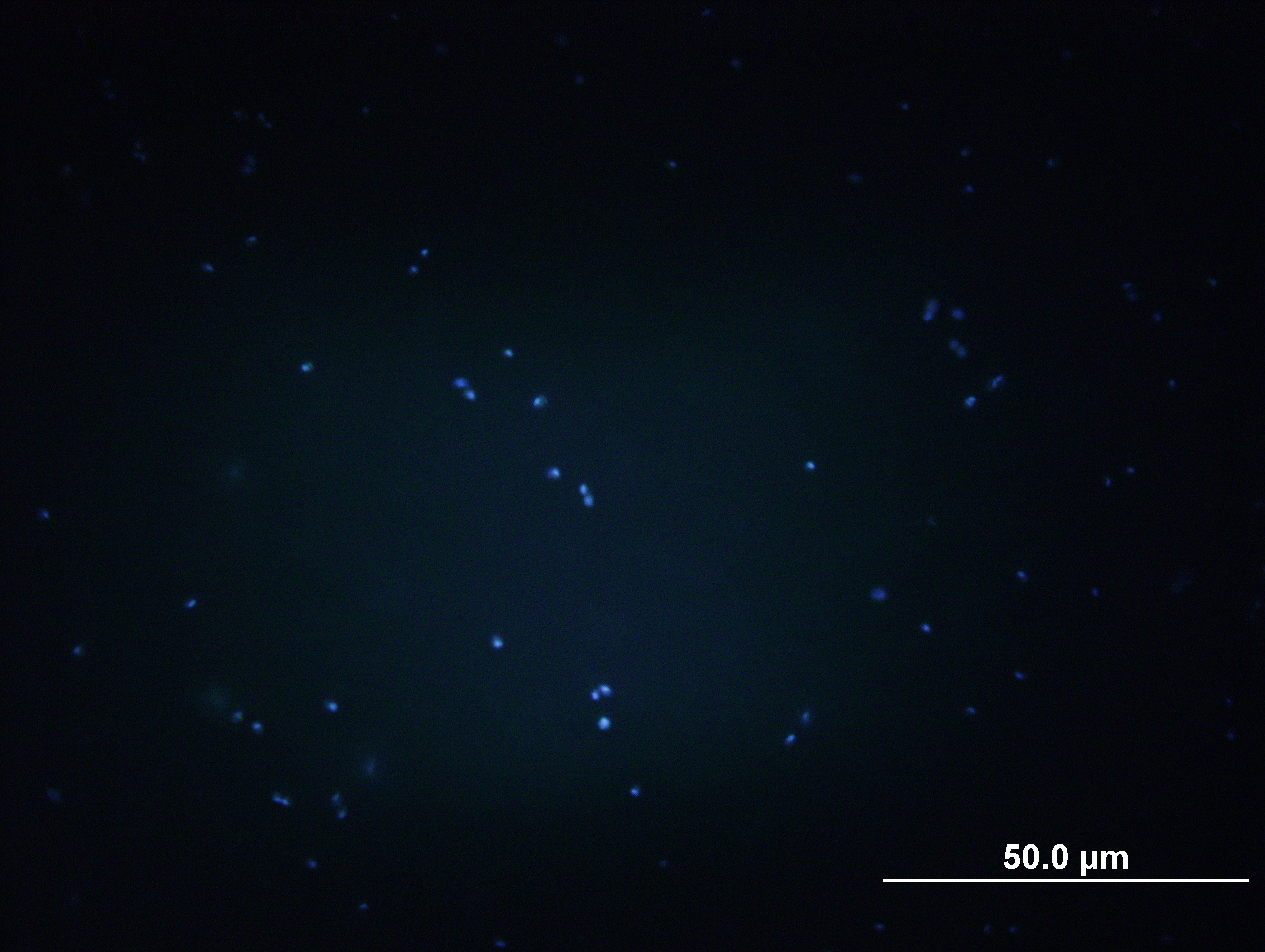
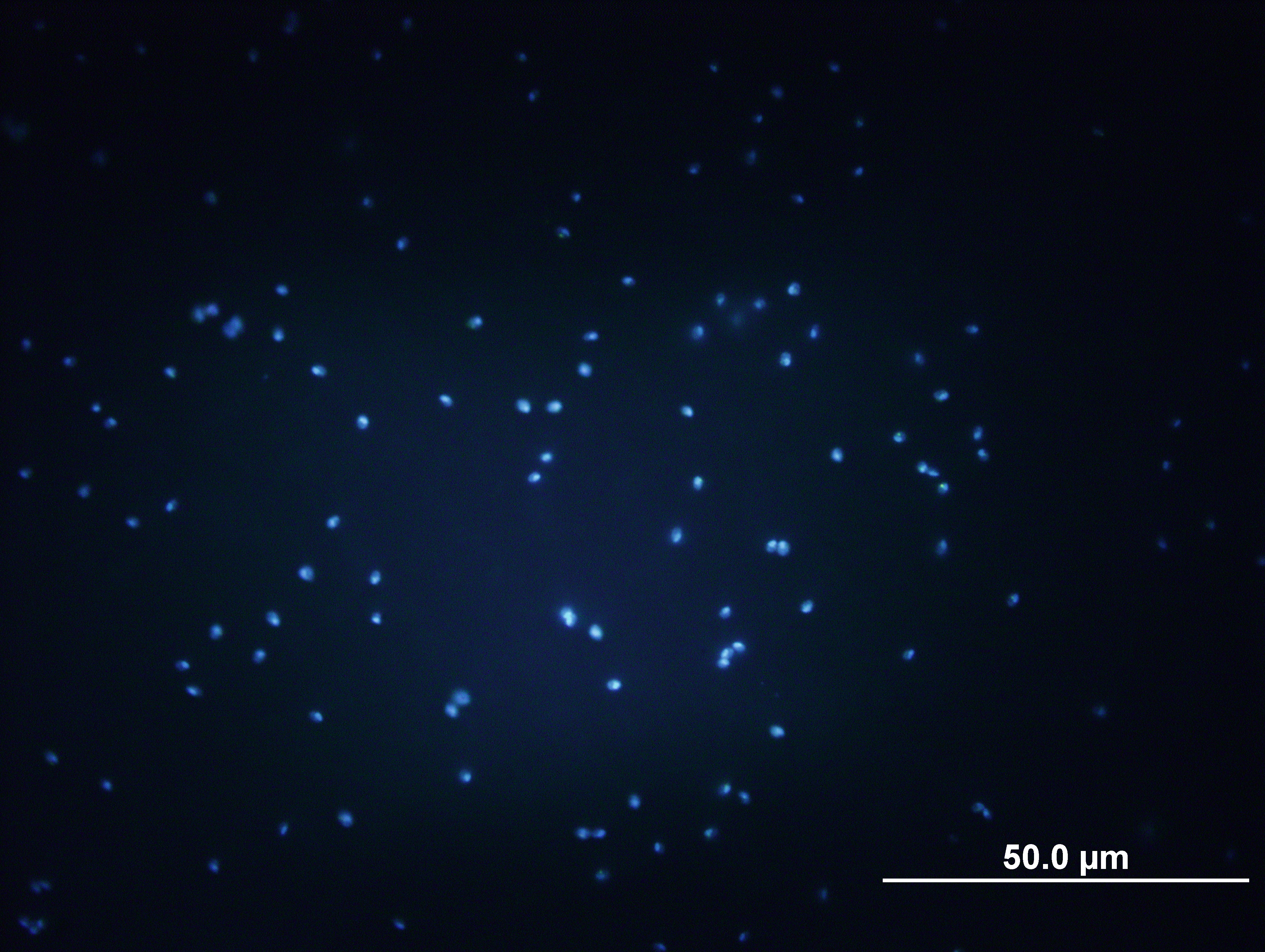
Here's an image of the sperm post-editing. The software picks up those super tiny cells! Pretty amazing.
I have been working a lot with ImageJ to analyze the videos I got from the experiment. I was able to get data (woo!), but I don't know how accurate it is (boo!). I am exploring if there is a way in the software to manually pick and choose the cells that it tracks because as of now, I think that it is picking up non-cellular matter and including it in the analysis which is making the motility percentage really low.
Official experiment day (July 12th) is drawing ever closer and my partner and I still have a lot to do before then. Unfortunately, we will have to miss the Doc Rickett's lab tour to finish some prepping. Hope you guys have a great time and see ya for breakfast on Monday
Posted by tthisner at Jul 07, 2016 18:05
|
|
I spent this week traveling around the San Francisco Bay Area with the CeNCOOS staff talking to folks that CeNCOOS supports and/or want to support in the future. We visited Ocean Science Trust based out of Oakland and talked to several people who sit on the governing board of CeNCOOS. They highlighted the importance of saying the "so what?" question to the work that we are doing with ocean acidification and marine mammal stranding work. Unfortunately, it was quite difficult to keep tracking of what is going on because of the acronym soup that was happening but everything made sense as soon as I asked my mentor afterwards. After OST, we drove out of Tomales Bay, where I got a chance to see Hog Island Oyster Company, take a few pictures around the site for my story map. Lastly, we met with the people at Point Blue in Petaluma, where they are working on whale strike models to determine whether vessels should be slowing down at certain times of the seasons to reduce the amount of whales that would be strike by big container ships.
We were fortunate to stay at Bodega Marine Lab where we got to meet several of the PIs that are working on ocean acidification research, abalone research and kelp forest monitoring research. I learned a lot about the types of research going on in there but the really cool project I got to see was that they have the largest population of white abalone in the world. White abalone are considered very close to extinction and BML has been successful in a breeding program. They hope to find the best location to reintroduce white abalone to the wild and they have treated the current strain of abalone with wax (shell) to prevent them from harboring shell boring animals.
Finally, I got to interview the folks that started Hog Island Oyster Company, which is the real reason for my travels. Terry Sawyer was once an aquarist at MBA and was lured away to start farming oysters. As for the rest of the story, I will be including some snippets of video in my project
Posted by desmond at Jul 11, 2016 13:19
|
|
Better late than never? It was a very short week but my mentor came back after 3 weeks away! Woo! So I got to check in with him about how my project has been progressing. He hadn't seen any of the primary component analysis I have done for temperature, salinity, Nitrate, chlorophyll, and primary production so that was new to him. My project has shifted more toward this analysis of modes of variability throughout the whole 26-year time series and slightly away from a straight comparison of El Niño events but since these events are IN the time series and account for a lot of the variability we have seen in the Bay in addition to seasonal change (40-50% of var), it's still inevitably an El Niño project as well.
Posted by gchavez at Jul 12, 2016 09:09
|
|
 chiro-adult-300.jpg (image/pjpeg)